Insulin Resistance and the Menopause Belly: Reclaiming Your Metabolic Health
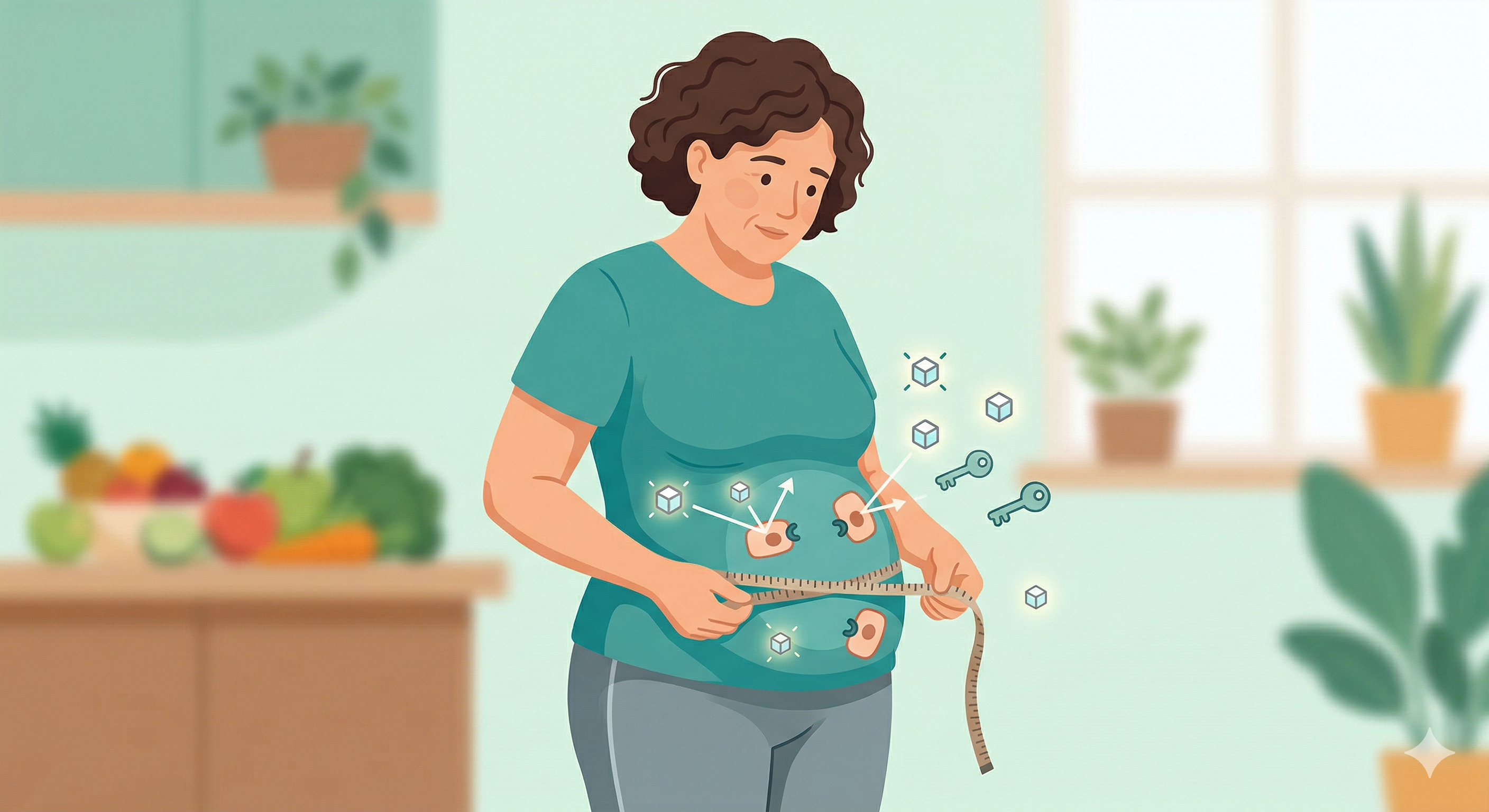
You haven't changed your diet or your exercise routine, yet your waistbands are suddenly tight. The weight that used to settle on your hips and thighs is now pooling firmly around your midsection. This is one of the most frustrating hallmarks of perimenopause. It is not a failure of willpower; it is a fundamental shift in your metabolic landscape driven by insulin resistance.
The Estrogen and Insulin Connection
For decades, estrogen acted as a metabolic sensitizer, helping your cells efficiently absorb glucose for energy. As estrogen levels drop during the Second Spring, your cells become less responsive to insulin. To compensate, the pancreas pumps out even more insulin. This chronically high insulin acts as a fat-storage hormone, specifically directing the body to store energy as firm, visceral fat deep within the abdomen.
Shifting the Metabolic Gear
Because this is a hormonal issue, traditional calorie restriction often backfires, slowing your metabolism further. The true goal is to lower circulating insulin levels. When insulin drops, the body can finally switch from storing fat to burning it.
- The 16:8 Fasting Window: Giving your digestion a dedicated break is powerful. Condensing your meals into an 8-hour window and fasting for 16 hours allows your insulin levels to drop significantly, opening the door to fat burning.
- Strategic Low-Carb Nutrition: Spikes in blood sugar lead to spikes in insulin. Focus on deeply nourishing, low-carb meals. Eliminating refined sugars and sweet fruits, and replacing them with high-quality proteins, healthy fats, and fibrous vegetables keeps blood sugar beautifully stable.
- Prioritize Rest: High cortisol (stress hormone) also triggers insulin release. Deep sleep and stress management are non-negotiable pillars of metabolic health.
Frequently Asked Questions
Why is all my weight suddenly going to my belly during perimenopause?
As estrogen declines, the body naturally becomes more insulin resistant. This metabolic shift changes how your body stores fuel, redirecting it away from the hips and thighs and storing it as visceral fat deep within the abdomen.
Do I need to eat less to lose this menopause belly?
It is less about eating less and more about eating differently to manage insulin. Adopting a low-carb approach and practicing intermittent fasting gives your digestive system a break, helping to lower circulating insulin and allowing your body to access and burn stored visceral fat for energy.
Weekly Physiological Briefings
Clinical insights and nervous system rituals delivered once a week. No noise. Just wisdom.
Want this protocol molded to your specific rhythm?
Talk to the Sanctuary Guide to adjust these insights for your bio-individual needs.