Cortisol Rhythms: Why You Wake Up at 3 AM (And How to Stop It)
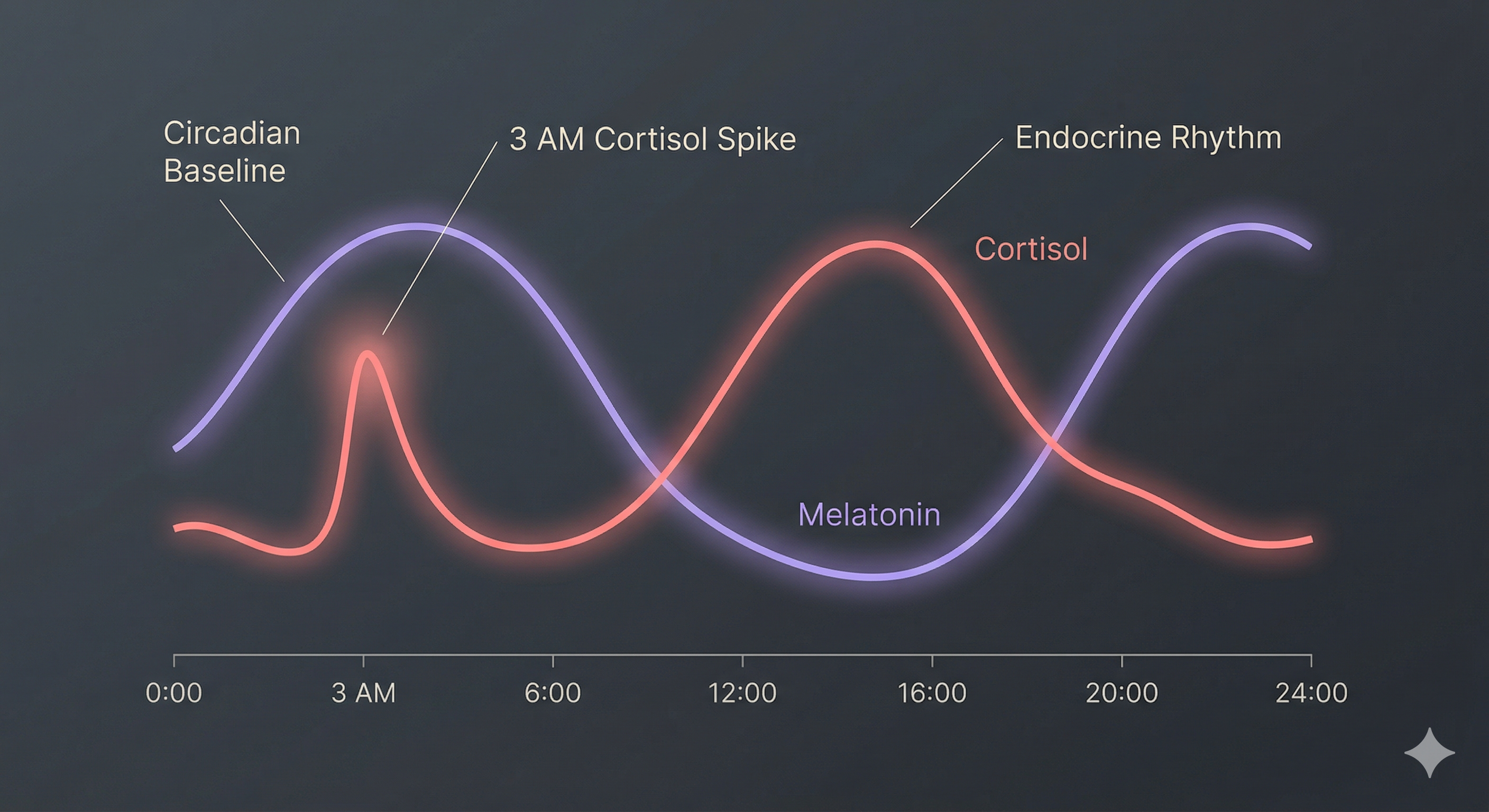
It is the most common grievance of the Second Spring: falling asleep with ease, only to snap wide awake at 3:00 AM, heart racing, mind churning, and the body suddenly radiating heat. This isn't traditional insomnia; it is a clinical event known as a Nocturnal Cortisol Spike.
The Blood Sugar Handshake
To understand the 3 AM wake-up, we must look at the relationship between your liver and your adrenal glands. As estrogen declines, our body becomes more sensitive to fluctuations in blood sugar. If your blood glucose drops too low during the night (hypoglycemia), your brain perceives this as an emergency. To save you, the adrenals dump Cortisol—your "fight or flight" hormone—into the system to trigger the liver to release stored sugar.
The result? You aren't just awake; you are chemically primed for a crisis. This cortisol surge also triggers a rise in body temperature, which is why "night sweats" and 3 AM wake-ups often happen in tandem.
The Sanctuary Protocol: The Evening Anchor
The "Protein Bridge": To prevent the midnight glucose crash, try a small "medical snack" 30 minutes before bed. A tablespoon of almond butter or a few walnuts provides the slow-burning fats and proteins needed to keep your blood sugar stable until dawn, preventing the adrenal alarm from ever going off.
Magnesium and the GABA Connection
While cortisol is the gas pedal, GABA is the primary inhibitory neurotransmitter—the "brakes." Magnesium Glycinate acts as a gentle cofactor for GABA production, helping to soothe the nervous system and lower the baseline of cortisol. For women in the Spring Phase, magnesium isn't just a supplement; it's a structural requirement for endocrine regulation.
Physiological FAQs: Sleep & Cortisol
Why do I feel hot when I wake up at 3 AM?
Cortisol is thermogenic, meaning it raises your internal body temperature. When your adrenals spike cortisol to manage low blood sugar, your core temperature rises, often triggering a hot flash or night sweat.
<div>
  <h4 style="color: #F72585; font-weight: 800; font-size: 1.1rem; margin-bottom: 0.5rem;">Can exercise timing affect my cortisol?</h4>
  <p style="color: #6b708d; line-height: 1.8;">Yes. High-intensity interval training (HIIT) late in the evening can keep cortisol levels elevated for hours, making the 3 AM spike more likely. Aim for vigorous movement before 2 PM, and stick to gentle, "down-regulating" movements like Yin Yoga in the evening.</p>
</div>
Frequently Asked Questions
Why do I feel hot when I wake up at 3 AM?
Cortisol is thermogenic. When it spikes to stabilize blood sugar, it raises your core body temperature, often causing night sweats.
Can exercise timing affect my cortisol?
Yes. HIIT in the evening keeps cortisol high. Shift vigorous exercise to earlier in the day to allow your endocrine system to down-regulate before bed.
Weekly Physiological Briefings
Clinical insights and nervous system rituals delivered once a week. No noise. Just wisdom.
Want this protocol molded to your specific rhythm?
Talk to the Sanctuary Guide to adjust these insights for your bio-individual needs.